Divorce Without Blame? The Proposal That Could Transform Family Law in Sri Lanka
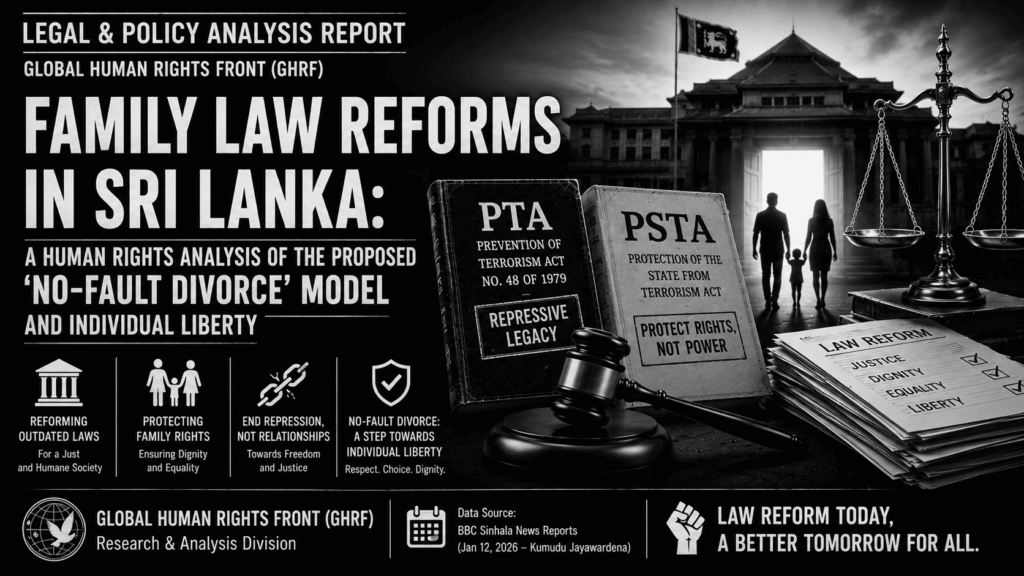
An analytical human rights study of the proposed No-Fault Divorce model, family law reforms, and individual liberty in Sri Lanka. This report examines Sri Lanka’s proposed No-Fault Divorce model, a reform that could fundamentally reshape the country’s family law framework. At the heart of the debate lies a complex question: how can society balance family […]
Silent Victims: Legal Protection Against Domestic Violence
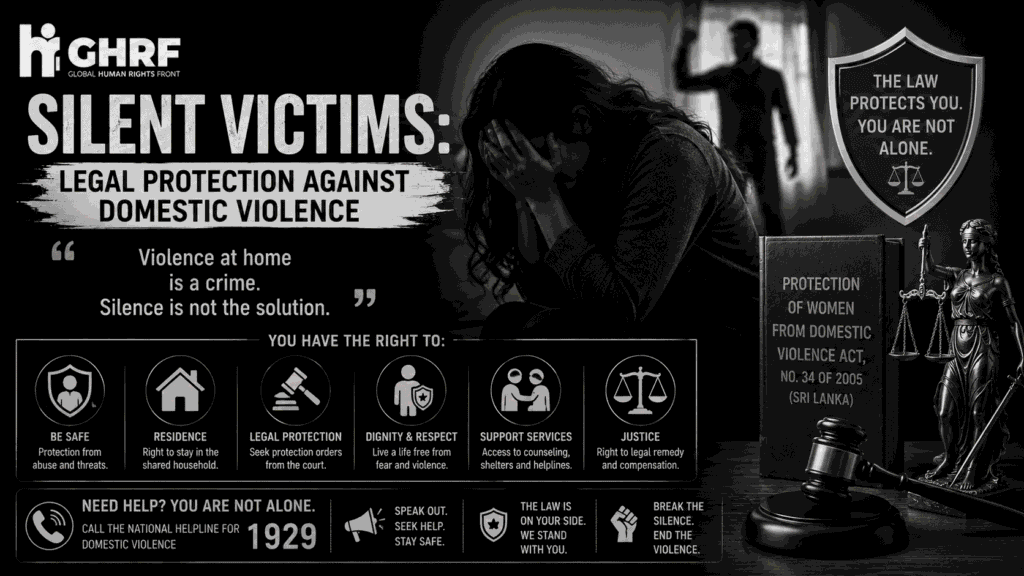
Domestic violence is a severe violation of human rights that occurs within the family unit or the home—the very premises meant to be the safest—yet it is rarely visible to the outside world. Cultural barriers, fear of compromising the family’s reputation, and economic dependence often compel victimized women and children to endure this suffering in […]
The Right to Peaceful Assembly: Identifying Human Rights Violations During Protests
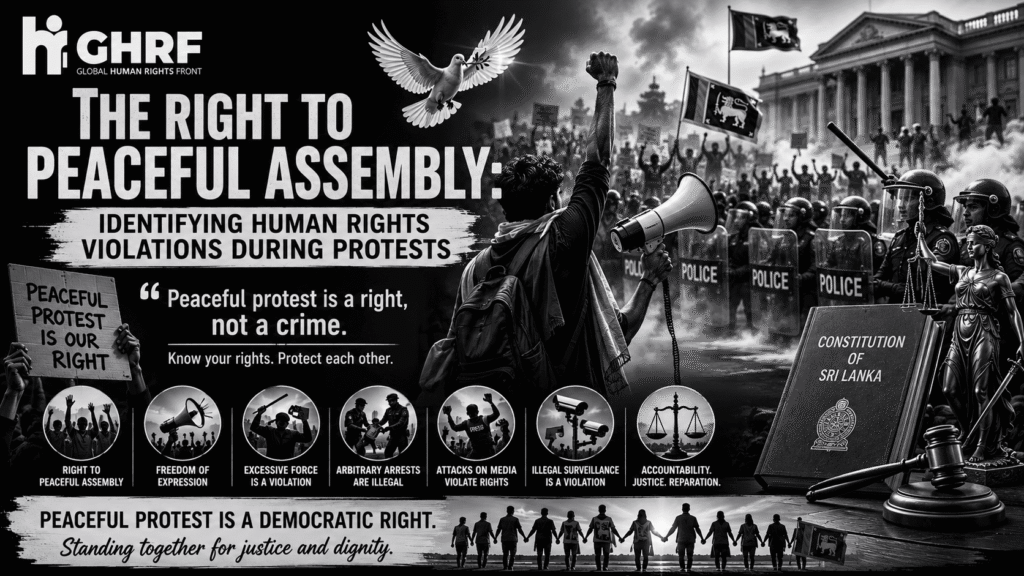
The right to peaceful assembly is the most powerful tool available to citizens living in a democratic society to collectively express their shared aspirations, demands, or dissent against government actions. This right is directly intertwined with the freedom of speech and expression, serving as the most active platform to communicate public opinion directly to rulers. […]
Police Bail and Court Bail: Basic Legal Remedies Every Citizen Should Know
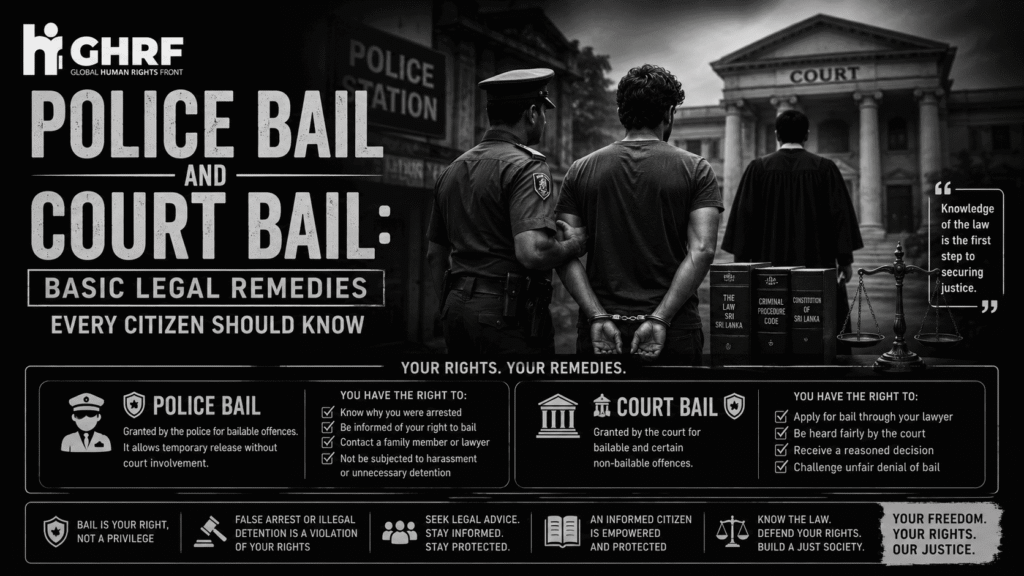
Within the criminal justice system of Sri Lanka, the granting of “Bail” is a crucial legal remedy that safeguards an individual’s personal liberty. A fundamental maxim of the law is the “Presumption of Innocence,” which dictates that every suspect must be considered innocent until proven guilty by a competent court of law. Accordingly, because detaining […]
The Voice of the Citizen in a Democratic Country! Freedom of Expression and Its Limits
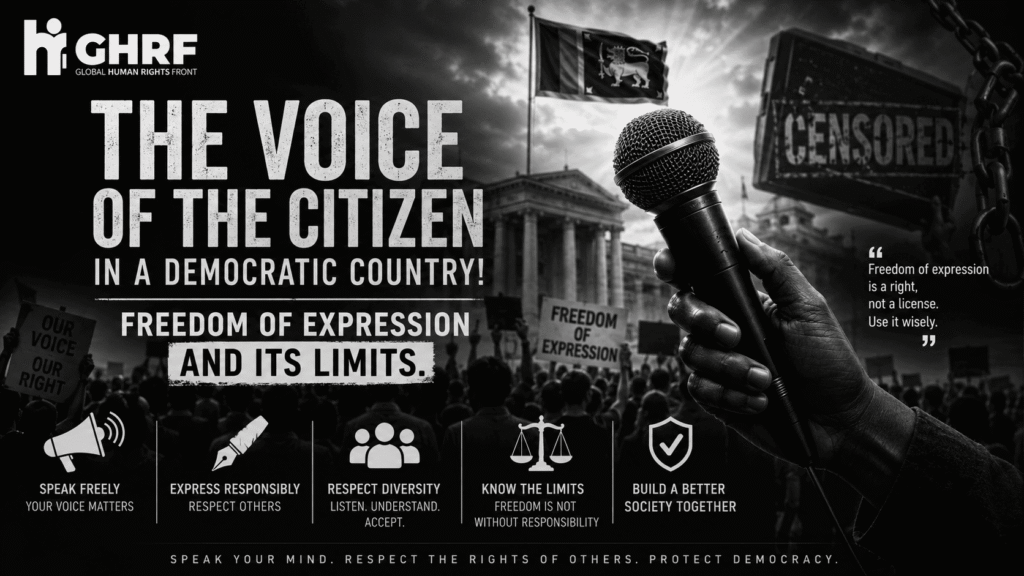
Freedom of expression is one of the most fundamental and cherished rights of a citizen living in a democratic society. The right of any individual to express and disseminate their views, opinions, and criticisms without fear or suspicion is a primary determinant of the survival of democracy. Because dictatorship and oppression reign where there is […]
The Correct Steps to Obtain Information from a Public Authority. Right to Information (RTI)
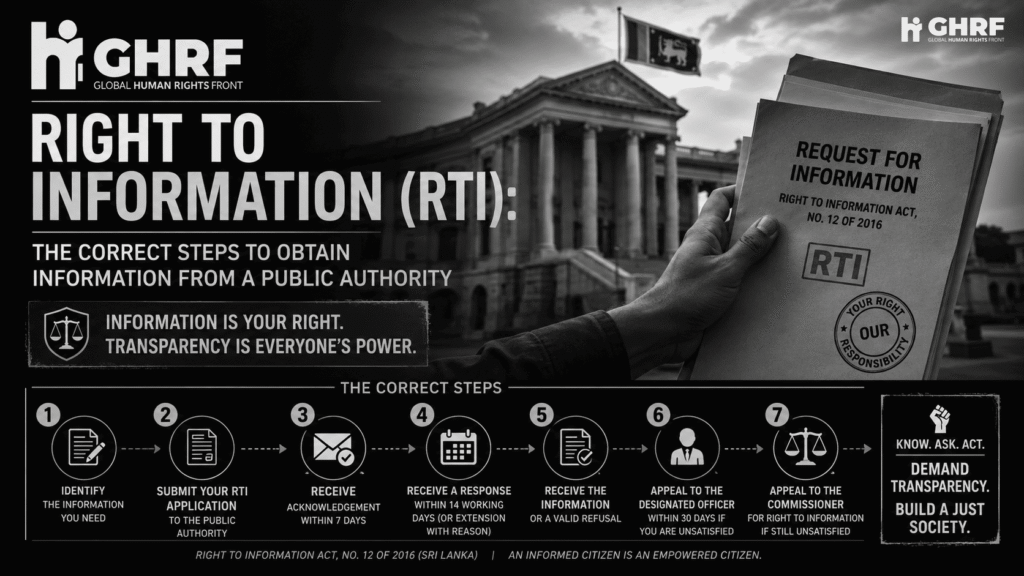
The Right to Information (RTI) is the most valuable and powerful citizen tool within a democratic governance structure. In Sri Lanka, following years of civil society struggle, the Right to Information Act, No. 12 of 2016 was enacted. This Act dismantled the long-standing culture of secrecy within state administration, empowering ordinary citizens to establish transparency […]
Your Fundamental Rights upon Arrest and the Responsibilities of the Police
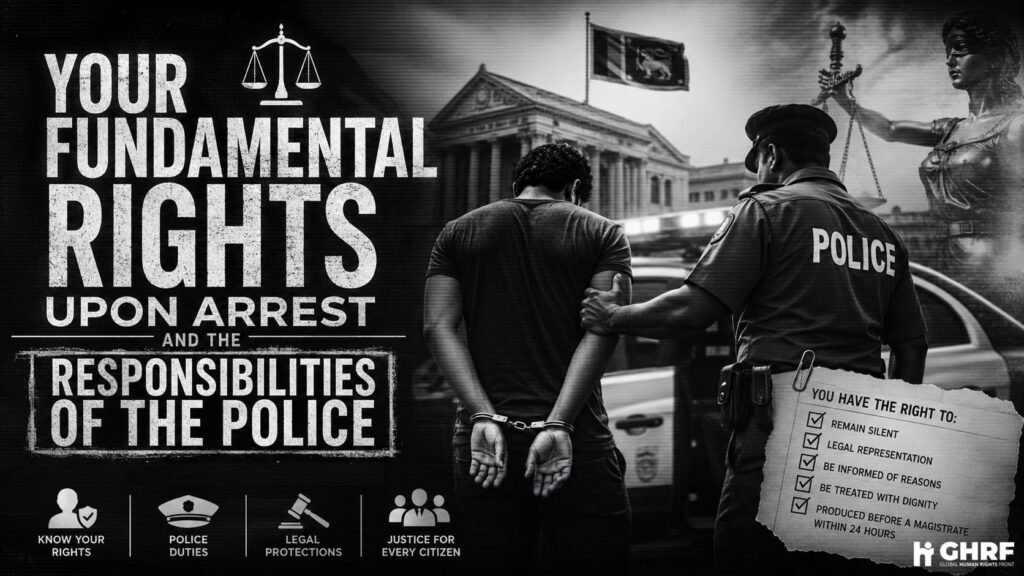
The Constitution of Sri Lanka guarantees a multitude of fundamental human rights inherent to every citizen from birth. However, due to a lack of proper legal literacy and awareness, ordinary citizens often experience unnecessary fear, intimidation, or rights violations when interacting with the police or other security forces. Any individual living in a democratic society […]
Reconciliation for Sustainable Peace in Sri Lanka
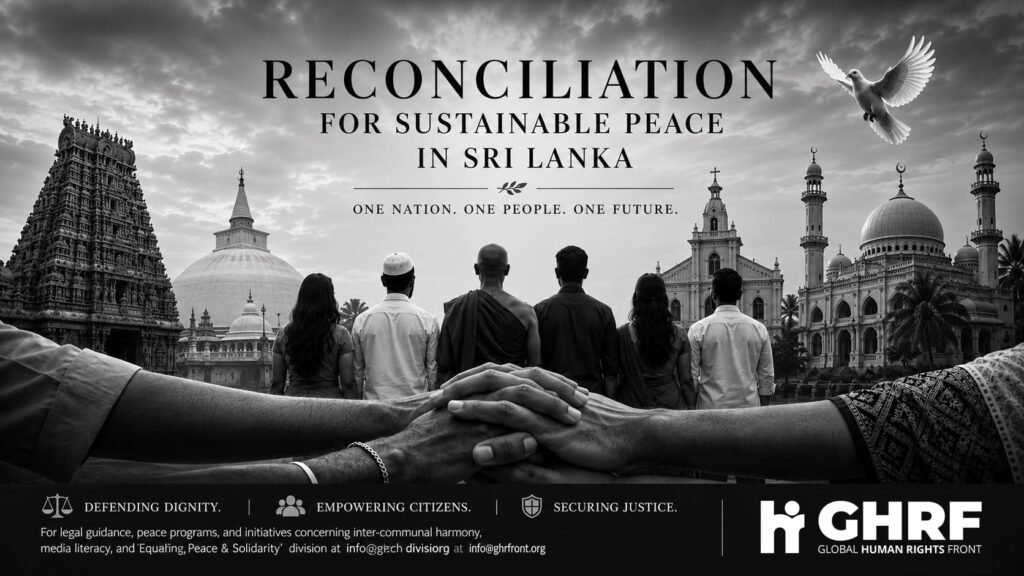
Sri Lanka is a beautiful, multicultural nation enriched with a diverse tapestry of ethnicities, religions, languages, and cultures. For centuries, various communities including the Sinhalese, Tamils, Muslims, Burghers, and Malays have coexisted harmoniously on this shared land. However, past political, social, and economic disparities led to a brutal civil war spanning nearly three decades, alongside […]